<?xml version="1.0" encoding="UTF-8"?>
<feed xmlns="http://www.w3.org/2005/Atom">
  <title type="text">The Mason Experience: Past and Present</title>
  <updated>2026-09-05T13:06:15+00:00</updated>
  <generator uri="http://framework.zend.com" version="1.12.20">Zend_Feed_Writer</generator>
  <link rel="alternate" type="text/html" href="https://pastandpresent.gmu.edu/"/>
  <link rel="self" type="application/atom+xml" href="https://pastandpresent.gmu.edu/items/browse?output=rss2"/>
  <id>https://pastandpresent.gmu.edu/</id>
  <author>
    <name>The Mason Experience: Past and Present</name>
    <uri>https://pastandpresent.gmu.edu</uri>
  </author>
  <link rel="hub" href="http://pubsubhubbub.appspot.com/"/>
  <entry>
    <title type="html"><![CDATA[The Freedom Aquatic &amp; Fitness Center: Serving more than just the Science and Technology Campus]]></title>
    <summary type="html"><![CDATA[<p><strong><em>Opening in September 1999, the Freedom Aquatic and Fitness Center on the Science and Technology Campus is a site for research into sports performance and a significant venue for recreation and comptetive sports in Prince William County and beyond.  </em></strong></p><img src="https://pastandpresent.gmu.edu/files/fullsize/2073ab44546c565bac41d2cb584d60b0.jpg" alt="Front entrance to the Freedom Aquatic &amp; Fitness Center" /><br/><p> On the northern-most side of the Science and Technology Campus is the Freedom Aquatic and Fitness Center. One of the first buildings constructed on the campus, it is a recreation and learning center for both the university and local communities. Thousands from the Prince William area and beyond visit the facility for recreational and competitive sporting activities. Mason faculty and students in its Athletic Training and Sports Medicine programs learn and conduct research in its sports performance laboratory called SMART (Sports Medicine Assessment Research and Testing) Lab. </p><p>As Mason's Science and Technology Campus (then known as Prince William Campus) began to take shape alongside the newly completed Prince William County Bypass near Manassas, construction was already underway on a state-of-the-art recreational facility designed for both the university and local citizens. During the late 1980s Prince William County Park Authority officials expressed a desire for a large recreation center with a 50-meter competition-sized swim facility located in the western part of the county. At that time the county managed several neighborhood recreation centers with small outdoor or indoor pools and gyms, some with outdoor basketball or tennis courts. The completion of a larger multi-sport indoor facility with a 40-meter pool in the eastern part of the county in 1991 only highlighted the need for an equal or even better facility for the other half of the county.   </p><p>During this same period, Prince William County and Manassas City officials were engaged in a dialog with George Mason to bring a university presence to the county. Mason Executive Vice President H. Randall Edwards served as its representative it during these initial stages. Edwards, who earned a PhD in Civil Engineering from Virginia Tech in 1970, had spent most of his career serving at Virginia institutions of higher education. Dr. Edwards was Mason’s point man regarding partnerships, particularly those with local governments where Mason had built or planned to build campuses. </p><p>Edwards, who had taken part in the initial discussions with county and city representatives regarding the establishment of a campus in the county, took the lead in those dealing with the creation of a unique recreation center administered by George Mason and open to members of the community. Collaborating closely with officials from Prince William County and the City of Manassas, he helped plan the project and iron out cost sharing for its three partners. Together, the partners raised more than $18 million for the construction of the facility by 1998.</p><p>Construction of the Freedom Aquatic and Fitness Center began in 1998 on thirteen acres on the northern side of the property. The Center opened in September 1999 and began serving the community, immediately. The addition of a large state-of- the-art aquatic center with a true Olympic-size pool within the county instantly provided a venue for swimming and diving practice and competitions for county high schools. Today the Center is the site for large weekend swim meets hosted by area clubs which draw participants from far beyond the county and the commonwealth.   </p><p>The 110,000-square-foot facility has maintained a 50-meter competition pool, leisure pool, weight training room, a fitness assessment lab, aerobics and cardiovascular fitness areas, basketball, running track, racquetball, and day care center. The fitness assessment lab, now known as the SMART Laboratory, is a 2,000 square-foot facility where Mason faculty, staff, and students conduct evidence-based research and assessment dealing with injury prevention, cardiovascular fitness, and body composition. The SMART Lab is open to Mason students, faculty, staff, and members of the public for personal fitness and physical assessment. </p><p>The Freedom Aquatic and Fitness Center stands as yet another example of George Mason University working with its neighbors to produce something beneficial to both the university and the local communities it serves.                                                                                  </p><p><em><strong><a href="https://pastandpresent.gmu.edu/items/show/17">For more (including 5 images) view the original article</a></strong></em></p>]]></summary>
    <published>2023-04-04T21:02:15+00:00</published>
    <updated>2026-04-17T19:45:24+00:00</updated>
    <link rel="alternate" type="text/html" href="https://pastandpresent.gmu.edu/items/show/17"/>
    <id>https://pastandpresent.gmu.edu/items/show/17</id>
    <author>
      <name>George Mason University Past and Present Team</name>
    </author>
  </entry>
  <entry>
    <title type="html"><![CDATA[Colgan Hall and the Beginnings of Mason&#039;s Science and Technology Campus]]></title>
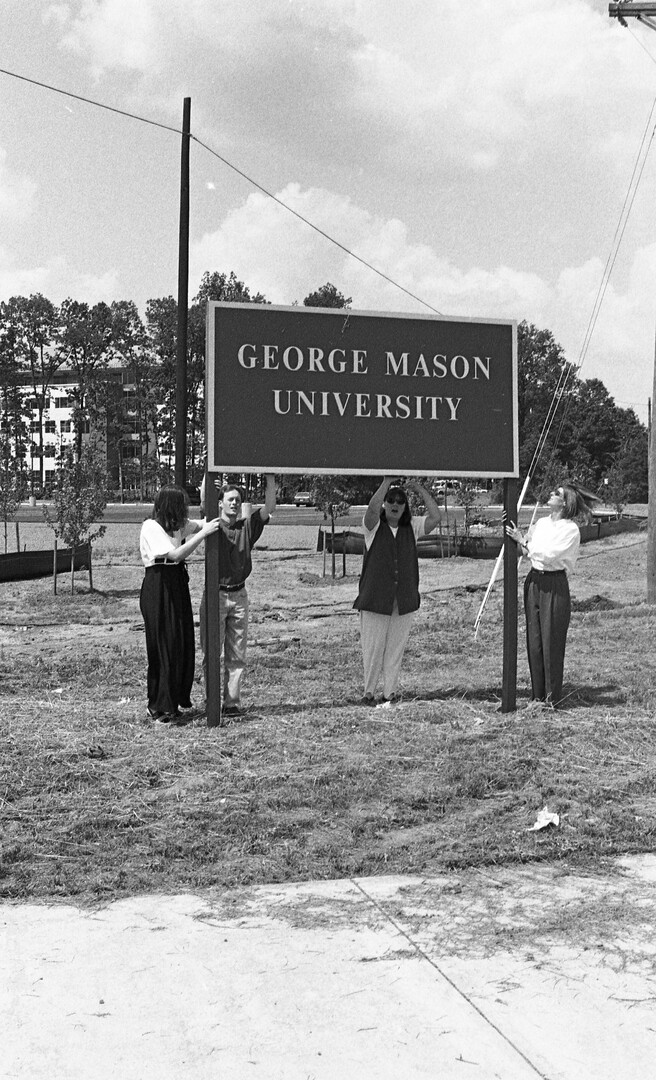
    <summary type="html"><![CDATA[<p><strong><em>You may have seen a concert, play, or other performance in the Hylton Performing Arts Center or participated in a swim meet in the Freedom Aquatic and Fitness Center. Perhaps you and your coworkers took part in a team building exercise at The Edge, or you are a Mason faculty member or student in Computational Sciences, Criminology, Biodefense, or Kinesiology. If so, you most certainly have visited Mason's Science and Technology Campus.   </em></strong></p><img src="https://pastandpresent.gmu.edu/files/fullsize/939bcaa3204c764685edb29f58d2f4d5.jpg" alt="George Mason University sign, Prince William Campus" /><br/><p>Mason's Science & Technology Campus, or Sci Tech, is a living example of the power of partnerships. Working with state, local, and county governments, as well as private entities, the university has established a place for both the university and the local community to learn, conduct research, and enrich themselves through cultural programs and physical activity. </p><p>In 1986, Prince William County government officials approached George Mason University about potentially establishing a campus in the county. Mason president, George W. Johnson formed an exploratory committee with Northern Virginia Community College (NVCC) to study a possible partnership between the three entities. Citing Prince William's population and economic growth, the committee recommended that Mason establish a "Center for Higher Education" at NVCC’s Manassas Campus located on Va. Rte. 234, just above U.S. Rt. 66. 
The idea to build on NVCC’s Manassas Campus was eventually abandoned because county officials felt that the Prince William facility should be a George Mason University project, exclusively. Mason's Board of Visitors agreed, and the project took form as the Prince William Institute. </p><p>The Prince William Institute opened in a temporary site in a shopping center located on Sudley Road in Manassas. It occupied part of an office building which also housed dentists and doctors' offices. During this period George Mason University, partnering with county officials, submitted a proposal to the governor and legislature in Richmond to construct a permanent campus for the Institute. While commonwealth leaders debated the project, classes and events were held at the Sudley Road location. </p><p>The measure received approval, and a committee led by Virginia Senator Charles "Chuck" Colgan and members of the Prince William County Board of Supervisors solicited area landholders for sales or donations of land for the campus. Colgan was a long-time state senator representing the western part of Prince William and an early supporter of George Mason in the county. 125 acres of land were acquired and donated by Prince William County for use by Mason. Colgan then went to bat for the project by securing the financing to complete the 8.5-mile 234 Bypass, alongside the tracts where the site was to be built. As an influential member of Virginia's Senate Finance Committee, Colgan pushed bills for the completion of this key road forward. The Bypass officially opened with a ceremony held in the actual roadbed in 1997 just months before the campus was to open. All in all, Colgan helped provide more than $600 million for George Mason University projects during his tenure.
Ground was broken for the initial buildings in September 1995. </p><p>President Johnson retired in June 1996, and Dr. Alan G. Merten succeeded him. During his first month in office Dr. Merten changed the new location’s name from the Prince William Institute to the Prince William Campus to raise its profile. </p><p>The Prince William Campus was dedicated on September 24, 1997, with the opening of Prince William I, the initial name given the first building. Prince William I contained the campus library on the first floor, campus administrative offices on the second, engineering labs on the third, and biotech labs on the fourth. This building was renamed the Occoquan Building in 2012, and then Senator Charles J. Colgan Hall in 2016. A life-sized statue of Senator Colgan was installed that year.</p><p>Since the campus’ opening, Prince William has constructed several additional academic and research buildings: Discovery and Katherine Johnson Halls, and the Institute for Advanced Biomedical Research and the Biomedical Research Laboratory. Beacon Hall, a residence hall provides housing for 152 graduate students. The Edge, a course presenting physical and mental challenges to help develop teamwork in groups. The Freedom Aquatic and Fitness Center and the Hylton Center for the Performing Arts were conceived through partnerships between the university and the Prince William County government and are enjoyed by members of the Mason and local communities. </p><p>In 2023 there were over 4,000 students enrolled in programs at Science and Technology Campus.</p><p><em><strong><a href="https://pastandpresent.gmu.edu/items/show/14">For more (including 7 images) view the original article</a></strong></em></p>]]></summary>
    <published>2023-03-17T18:27:05+00:00</published>
    <updated>2026-04-17T19:45:23+00:00</updated>
    <link rel="alternate" type="text/html" href="https://pastandpresent.gmu.edu/items/show/14"/>
    <id>https://pastandpresent.gmu.edu/items/show/14</id>
    <author>
      <name>George Mason University Past and Present Team</name>
    </author>
  </entry>
  <entry>
    <title type="html"><![CDATA[The Center for the Arts: Bringing the Community to Mason]]></title>
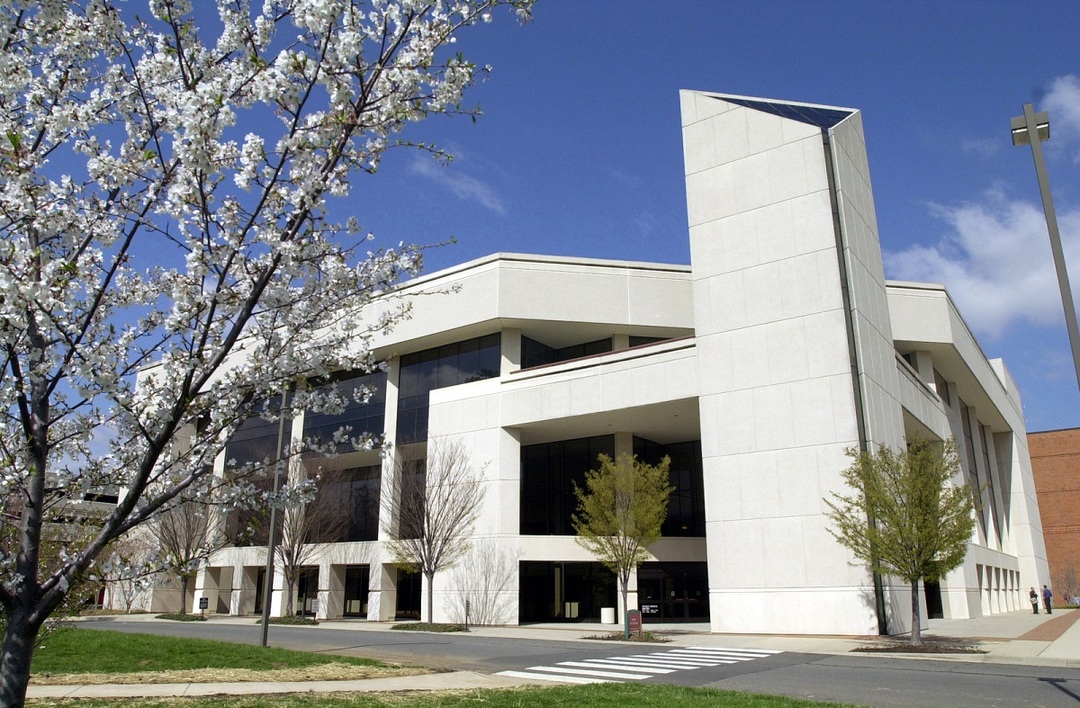
    <summary type="html"><![CDATA[<p><strong><em>When the Center for the Arts opened, President George Johnson called it the beginning of a dream. He and his wife Joanne believed a top-class performing arts venue would bring the local community to Mason. It did, and it eventually brought a visit from a United States president. </em></strong></p><img src="https://pastandpresent.gmu.edu/files/fullsize/99409601d68db8b226cd26173f12b08b.jpg" alt="Springtime at the Center for the Arts" /><br/><p>Mason President George W. Johnson and his wife, Joanne Ferris Johnson, were enthusiastic patrons of the arts. They believed that the performing arts were a unifying force, bringing people from all walks of life together. Therefore, a high-quality venue would bring the community to the Mason campus and foster ties that would benefit students long after graduation. Given the commonwealth's tight budget situation at the time, Johnson believed it was unlikely that he would receive additional funding for a performing arts center, so he decided to get creative with his approach. He submitted a proposal to the legislature asking for $40,000 to dig a hole in the ground with a sign calling the hole a "performing arts center". His bluff worked. The ludicrous proposal attracted Richmond’s attention, earning him a meeting to discuss his true vision for Mason’s performing arts center, which the legislature eventually agreed to partially fund. However, additional funding was needed to create the grand theater that President Johnson envisioned. </p><p>Joanne Johnson served as the chair of the George Mason Fund for the Arts during her tenure as Mason’s First Lady. She led the fundraising efforts for the Center of the Arts, including the annual Arts Gala, a night of dining and entertainment with the goal of raising money for buildings and programs to support the arts at Mason. Each year ahead of the Arts Gala, beginning in 1983, Mrs. Johnson led a group of women in crafting an item they would later auction or raffle to fund performing arts and cultural projects at Mason. Two of the more notable items they produced as part of this effort were the Mason Heritage Quilt from 1984, which is on display in the lobby of the Center for the Arts, and a yellow MG TB kit car. At Mrs. Johnson’s request, students also helped at the gala. The gala became the first step in the Johnsons’ vision to connect the community to Mason through the performing arts. The Center for the Arts represented the culmination of Joanne Johnson’s arts fundraising. </p><p>Overall, the Center for the Arts took ten years of fundraising and approximately three years of construction to complete for a total cost of $10.6 million. The Center for the Arts was initially called Humanities III because it was the final building in Mason’s Humanities complex, which included the deLaski Performing Arts Building (Humanities I), completed in 1988, and the Music and Theater Building (Humanities II), completed in 1989. When the Center for the Arts opened, it was one of the most state-of-the-art theater facilities in the United States. George Izenour, a theatrical and acoustical consultant, designed the building’s Concert Hall, which was called its “crown jewel.” Izenour developed the first electronic dimming system for stage lighting in 1947 and later invented an electronic winch system to move scenery. He designed a convertible theater for Harvard University in the 1950s and eventually helped develop over 100 theaters across the United States. Mason’s Concert Hall features the technical innovations for which Izenour was known. Its maximum seating capacity is two thousand in concert mode, but the space can be reduced to eight hundred seats in theater mode for smaller, more intimate performances. Its acoustic panels also adjust to provide excellent sound for both settings. In addition, the Concert Hall features an adaptable stage. In addition to the main stage, a front “lift” stage can be raised to increase space for actors or provide additional portable seating. It becomes an orchestra pit when lowered. </p><p>The Concert Hall opened on October 6, 1990, with a black-tie event and an atmosphere of joyous excitement. EGOT winner Marvin Hamlisch hosted the formal opening night celebration, featuring performances by the cast of Broadway’s <em>A Chorus Line</em>, opera singer Roberta Peters, flutist Jean-Pierre Rampal, comedian Robert Klein, musical satirist Peter Schickele, and the Fairfax Symphony Orchestra. Despite the famous names on stage, Hamlisch declared, “There are a lot of wonderful performers here this evening, but the star is undoubtedly the theater.” President Johnson gave a speech that night, explaining his hope that the venue would bring cultural enrichment and build strong community ties in Northern Virginia. </p><p>Initially, Mason students had difficulty believing the new building was for them. In January 1990, <em>Broadside</em> shared artists’ renderings and reported detailed specifications for the Center for the Arts in a two-page spread to mixed responses from students. However, as opening night neared, students across all majors shared President Johnson’s enthusiasm and belief in the Center for the Arts’ potential to grow Mason’s prestige. In addition, they realized they could spend their time there since 500 free tickets for each performance were allocated for students. An average of 74% percent of free student tickets were claimed during the Concert Hall’s inaugural season. Despite the high percentage, for the following academic year and performance season, the Center for the Arts combined its outreach efforts with <em>Broadside</em> to make the process for reserving tickets clearer and stress that there was no dress code. </p><p>Today, Mason still offers free tickets for students to events at the Concert Hall. Performances with free student tickets are made public through the College of Visual and Performing Arts. Student tickets are also reserved via Mason360. In its 32-year history, over 120 Grammy winners have performed at the Center for the Arts. It has hosted world premieres of theatre, dance, and concert performances. The Center for the Arts has also been the site for political events and debates, including two visits by President Barack Obama. On January 8, 2009, President Obama, then president-elect, delivered his plan for economic recovery from the Great Recession to the American public from Mason’s Concert Hall. He returned on October 5, 2012, as part of his re-election campaign. The Johnsons’ vision of the Center for the Arts bringing prestige to the university and connecting the community to Mason has been fully realized.</p><p><em><strong><a href="https://pastandpresent.gmu.edu/items/show/12">For more (including 12 images) view the original article</a></strong></em></p>]]></summary>
    <published>2023-02-22T19:10:14+00:00</published>
    <updated>2026-04-17T19:45:23+00:00</updated>
    <link rel="alternate" type="text/html" href="https://pastandpresent.gmu.edu/items/show/12"/>
    <id>https://pastandpresent.gmu.edu/items/show/12</id>
    <author>
      <name>George Mason University Past and Present Team</name>
    </author>
  </entry>
</feed>